Showing posts with label liberty 5000 year leap. Show all posts

Saturday, October 24, 2009

The Principles of Liberty: Principle 16

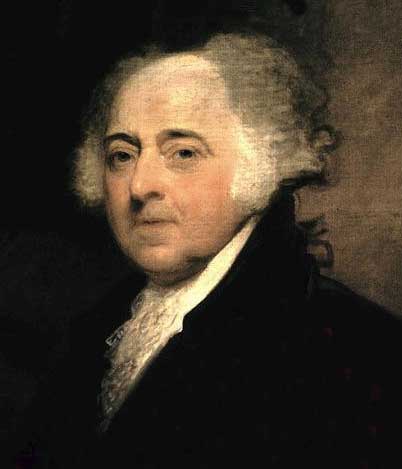
This man is close to my heart, he is one of my ancestors. And During his life, he believed that no one would remember him, what he tried to do or what he stood for, and so, it is with great personal pleasure that I prove him wrong.


The 28 Principles of Liberty: Principle 16

“The Government Should be Separated into Three Branches-Legislative, Executive and Judicial.”

Polybius, recognized as the greatest of all Greek Historians, lived 204 to 122 B.C. When Greece was conquered by Rome, Polybius was deported to the Roman capital. This is where he quickly recognized the advantages of the Roman republic. He was the author of 40 books of history.

During his day, there were three main types of government discussed; Monarchy, Aristocracy and Democracy. Unfortunately, none of these systems, when allowed to govern, provided equality, prosperity, justice or domestic tranquility for the whole of society. He felt that he understood why this was. Each form carries within itself, the seed of it s own degeneration, if allowed to operate without checks or balances. Monarchy could easily become tyranny, aristocracy sink into an oligarchy and democracy into mob rule by force and violence.

Polybius felt that there were essential elements in each form and questioned why not combine them into a single system? This idea began its birth in the Roman system, but shortly after Polybius died, the Romans abandoned their principles of a republic and chose an emperor instead. So, Polybius’s idea of a system that restrained government from acquiring enough power to abuse the people died with him, until Baron Charles de Montesquieu determined to resurrect it. He wanted to submit this mixed constitution for consideration of modern man.

Montesquieu became one of the best-educated scholars in France. He wrote a book called “The Spirit of Laws”, which has been described as one of the most important books ever written. The final writing took him two solid years. It was greatly admired by the Founders. It documented the practical possibility of a government based on ‘separation of powers’ or a mixed constitution.

In book XI, Montesquieu set forth the ingredients for a model constitution. The Founders used many portions of it as a guide in their own work. The Founders joint effort far exceeded Montesquieu, but he does deserve credit for his contribution.

A single executive was ideal to Montesquieu due to what he witnessed as a weakness of the Roman system in setting up two or more consuls. Having a single person who can make decisions quickly and decisively and cannot escape either credit or blame for the consequences would be ideal.

It was John Adams that pushed the idea of the separation of powers. It was a very revolutionary idea and very unpopular when first presented. It was only Dr. Benjamin Rush that agreed with John Adams at first. In writing a letter to Benjamin Rush, John Adams mentions how Thomas Paine came to talk to him about it. John Adams felt that politics was a divine science and dedicated much of his life to studying it, so that his children and grandchildren may be blessed by his efforts. He started by planting his seeds of separation of powers in Massachusetts.

It was quite the struggle, but he did succeed, and for the first time in the world, a constitution read:

“In the government of the Commonwealth of Massachusetts the legislative, executive and judicial powers shall be placed in separate departments, to the end that it might be a government of laws and not of men…”


Years later, he got his ideas incorporated into the U.S. Constitution, but was never able to gain genuine acceptance for himself. Even though he had been the first U.S. vice president and the second President, he very shortly disappeared into history and was nearly forgotten. It was when scholars started digging into the origins of American constitutionalism that he came into perspective. He, himself, thought that few would remember what he had attempted to accomplish. To a friend he wrote, “Mausoleums, statues, monuments will never be erected to me. Panegyrical romances will never be written, nor flattering orations spoken to transmit me to posterity in brilliant colors.”

His ideas however, did catch on. Pennsylvania revised their constitution to include a separation of powers and Benjamin Franklin, one of the last to be converted, acknowledged that the Constitution of the United States was as perfect as man could be expected to produce, and urged all members of the Convention to sign it.

We close with John Adams aspiration “To see rising in America an empire of liberty, and the prospect of two or three hundred millions of freemen, without one noble or one king among them.”

The 28 Principles of Liberty are adapted from W. Cleon Skousen's book, The 5000 Year Leap and are brought to you by Fragrant Smoke.


Wednesday, May 27, 2009

The 28 Principles of Liberty -Principle #4

Principle 4 "Without Religion the Government of a Free People Cannot be Maintained."

Many people today fail to realize the importance that the Founding Fathers felt religion played in the structure of the American Civilization that they hoped would emerge as the first free people of modern times. They felt that religion would be as important to us today, as it was to them then.

In 1787, the same year that the Constitution was written and approved by congress, they passed the Northwest Ordinance, which emphasized the essential need to teach religion and Morality in schools. Here is how they worded it:

"Article 3: religion, Morality, and Knowledge being necessary to good government and the happiness of mankind, schools and the means of education shall forever be encourage."

George Washington, in his farewell address said, "Of all the dispositions and habits which lead to political prosperity, religion and morality are indispensable supports... And let us with caution indulge the supposition that morality can be maintained without religion...Reason and experience both forbid us to expect that national morality can prevail to the exclusion of religious principle. It is substantially true that virtue or morality is a necessary spring of popular government."

In order to avoid divisive religious teachings, Jefferson wrote a bill for Establishing Elementary Schools in Virginia that made religion a unifying cultural adhesive. It stated, "No religious reading, instruction, or exercise shall be prescribed or practiced inconsistent with any religious sect or denomination." So, the religious tenets in public schools would have been what was universally accepted by all faiths and fundamental in their premises.

Benjamin Franklin gave five fundamental points to be taught in the schools.
1. There is a Creator who made all things and mankind should recognize and worship Him.
2. The Creator revealed a moral code of behavior for happy living that distinguishes right from wrong.
3. The Creator will hold us accountable for how we treat each other.
4. All mankind live beyond this life.
5. In the next life mankind are judged for their conduct in this one.

The Founders often referred to these five fundamentals as the religion of America. Samuel Adams said that is group of basic beliefs constitute 'the religion of America and is the religion of all mankind." John Adams called these tenets the general principles on which the American Civilization was founded. America became great, because America was good. When America is no longer good then we can expect that the nation will cease to be great.

(The 28 Principles of Liberty are adapted from the book "The 5000 Year Leap" by W. Cleon Skousen. This article is also published at www.Myspace.com/angelsings www.LDSFreemen.com and the Cape Fair Cryer newspaper in Missouri.)

Wednesday, May 13, 2009

The 28 Principles of Liberty Principle #3 -Electing Virtuous Leaders

A wise Samuel Adams once stated “But neither the wisest constitution nor the wisest laws will secure the liberty and the happiness of a people whose manners are universally corrupt. He therefore is the truest friend to the liberty of his country who tries most to promote its virtue, and who, so far as his power and influence extend, will not suffer a man to be chosen into any office of power and trust who is not a wise and virtuous man.”

Samuel further states that they need to have proven virtue and proven wisdom. One of the most quoted scriptures of that time period was Proverbs 29:2 “When the righteous are in authority, the people rejoice; but when the wicked beareth rule, the people mourn”.

The founders were keenly aware of the short comings of human nature. Knowing that they could not create a utopian society, they created a system that would help bring forward the most promising element of society and then be able to draft them into service. They hoped to develop a spirit of public virtue by having leaders that have a strong private virtue. It would be a new kind of freemen aristocracy or natural aristocracy, which would be open to all, but inheritable by none. Every leader would have to rise to office by merit, not by wealth or reputation of his ancestors. They firmly believed that the best of private citizens should accept major roles in the public life.

John Adams believed that we must prepare for service in politics. He said “The science of government is my duty to study, more than all other sciences; the arts of legislation and administration and negotiation ought to take place of, indeed to exclude, in a manner, all other arts. I must study politics and war, that my sons may have liberty to study mathematics and philosophy. My sons ought to study mathematics and philosophy, geography, natural history and naval architecture, navigation, commerce, and agriculture, in order to give their children a right to study painting, poetry, music, architecture, statuary, tapestry, and porcelain.”

Benjamin Franklin taught that it was important that public office was viewed as an honor rather then a position of profit. He gave the example of how there was a violent struggle to be appointed to office in Europe due to the amount of pay for the position. He felt that it was of utmost importance that service would attract men of public virtue and repeal scoundrels scrambling for a soft job. He stated that although the founders set low pay, throughout time this would change and the rulers would return to the political warfare that occurs between the governed and the governing. Those who govern always seek for their own personal benefit and have an appetite that is never satisfied.

Franklin foretold the potential of America returning to a monarchy. Not called a monarchy, of course, since the people would never allow it but rather a president that would be given monarchial powers. He stated that if given the chance, this executive power would follow the example of Pharaoh. First get all the people’s money, then all their lands, and then make them and their children servants forever.

(The 28 Principles of Liberty are adapted from the book "The 5000 Year Leap" by W. Cleon Skousen. This article is also published at www.Myspace.com/angelsings www.LDSFreemen.com and the Cape Fair Cryer newspaper in Missouri.)